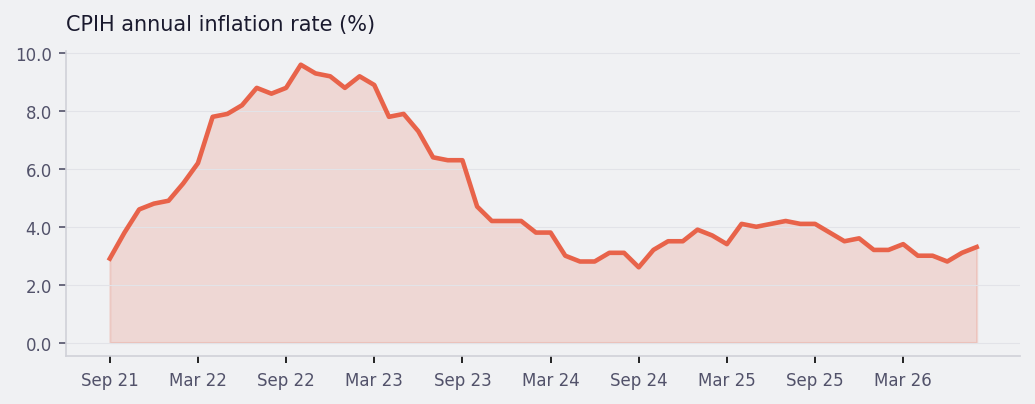
As the UK grapples with the ramifications of a rapidly rising cost of living, the Consumer Prices Index including owner occupiers' housing costs (CPIH) annual inflation rate of 3.3 per cent for August 2026 serves as a stark reminder of the challenges facing the nation, particularly for younger generations. In a society where homeownership has often been viewed as a rite of passage, the growing cohort known as "Generation Rent" finds itself ensnared in a web of escalating costs, stagnant wages, and an increasingly precarious housing market. The statistic not only reflects broad economic pressures but also highlights the specific vulnerabilities of those who have been unable to secure property ownership, pushing them further into a cycle of renting that seems inescapable.
The implications of a 3.3 per cent inflation rate are particularly pronounced in the rental sector, where many young adults are already dedicating a significant portion of their income to housing costs. With wages failing to keep pace with inflation, many renters are forced to make difficult choices, such as cutting back on essentials or delaying major life milestones like starting a family or pursuing further education. In urban areas, where rental prices often surge well beyond inflation rates, the disparity is even more alarming. The resultant strain not only impacts individual households but also reverberates through local economies, as consumer spending decreases and businesses reliant on discretionary income face downturns.
Historical context adds another layer to the current situation. The rise of Generation Rent can be traced back to the housing market crises of the late 2000s, which solidified the notion that homeownership was slipping beyond the reach of many, particularly the younger demographic. This shift has led to a rethinking of traditional societal values surrounding property ownership. With the average age of first-time buyers now significantly higher than previous generations, the ramifications of an enduring rental culture are profound. The long-term implications of this trend are troubling; as the state of renting becomes normalised, we may witness an erosion of community ties and a decline in the sense of belonging that homeownership historically fostered.
As we look towards the future, the question arises: how will society adapt to this new reality? Policymakers face mounting pressure to address the growing disparity between wages and housing costs, with many advocating for more robust tenant protections and affordable housing initiatives. The statistic of 3.3 per cent inflation is not merely a number; it encapsulates the frustrations and aspirations of a generation that is coming to terms with a new economic landscape. For Generation Rent, the burden of inflation is more than a financial statistic; it is a daily reality that shapes their lives and influences their trajectories. The urgency for reform in housing policy has never been greater, as the implications of inaction could entrench socioeconomic divides and undermine the very fabric of British society.