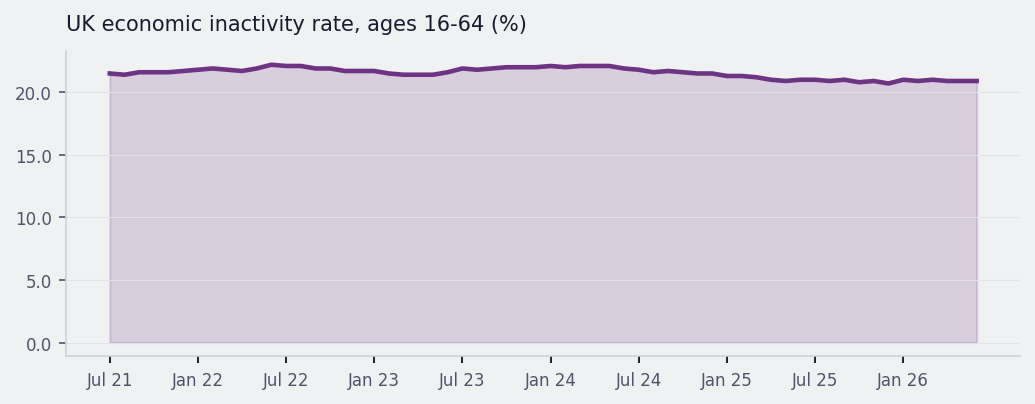
In the landscape of contemporary British society, the economic inactivity rate among those aged 16 to 64 stands at a striking 20.9% as of June 2026, a statistic that encapsulates a significant challenge for the nation's workforce and broader socio-economic fabric. This figure is not merely a reflection of individuals choosing not to engage in the labour market; it reveals a complex interplay of factors including health issues, skill mismatches, and the lingering impacts of the COVID-19 pandemic. As we delve into the implications of this persistent absence generation, it becomes clear that the ramifications extend far beyond individual choices, impacting families, communities, and the economy at large.
The consequences of such a high rate of economic inactivity are particularly pronounced in education and skills development. With a substantial portion of the population disengaged from the workforce, educational institutions face the dual challenge of equipping young people with the necessary skills while also addressing the needs of those who may be outside traditional pathways. The absence of a significant segment of the population from the labour market raises urgent questions about access to education and training opportunities. This disconnection can exacerbate existing inequalities, particularly for disadvantaged groups who may already face barriers to employment. As such, educational initiatives must adapt, not only to prepare students for the jobs of the future but also to engage those who have become disillusioned with the prospects of work.
Furthermore, the economic inactivity rate highlights the importance of re-evaluating the support systems in place for those who find themselves outside the workforce. The government's approach to welfare, training, and health services must be holistic, addressing the root causes of inactivity rather than merely treating the symptoms. Programmes aimed at re-skilling and up-skilling individuals can be pivotal in bridging the gap between education and employment, but they require substantial investment and a commitment to long-term change. This is especially relevant as the UK grapples with the dual pressures of an ageing population and the rapid evolution of technology, both of which demand a workforce that is agile, adaptable, and equipped with relevant skills.
As the nation confronts these challenges, the urgency for innovative solutions becomes increasingly apparent. This significant level of economic inactivity presents not only a hurdle but also an opportunity for transformation within the education sector and beyond. By fostering partnerships between educational institutions, businesses, and community organisations, it is possible to create pathways that reintegrate the disconnected into the workforce. The success of such initiatives will rely on recognising the diverse experiences and needs of individuals, as well as embracing a forward-thinking approach that prioritises inclusivity and accessibility. Ultimately, how the UK responds to this pressing issue will shape not just the economic landscape but also the social cohesion and resilience of its communities for generations to come.