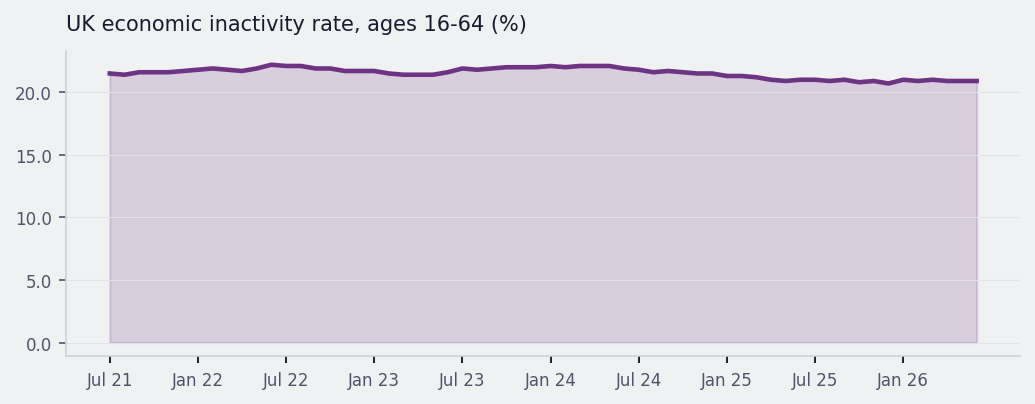
In the landscape of British politics, the economic inactivity rate among those aged 16 to 64 has reached a concerning 20.9% as of June 2026, according to the Office for National Statistics. This figure not only highlights a significant portion of the population disengaged from the labour market but also raises critical questions about the broader implications for democracy and civic participation. With nearly one in five individuals in this age bracket not participating in the workforce, the ramifications stretch beyond mere economic indicators, impacting the fundamental fabric of societal engagement and political representation.
A closer examination reveals that economic inactivity often correlates with increased disenfranchisement. Individuals who are not actively seeking work may feel less inclined to participate in the political process, perceiving it as irrelevant to their lives. This disconnection can manifest in lower voter turnout, which has been a persistent concern in recent elections. As engagement dwindles, the political landscape risks becoming skewed, as those who do vote are often not representative of the broader population. The challenge becomes more acute when considering that younger generations, who are increasingly facing barriers to employment, may feel their voices are not reflected in policy decisions made by those in power.
The implications of this situation extend into various domains, including social equity and community cohesion. As economic inactivity breeds disillusionment, the potential for social unrest increases. Groups that feel excluded from the workforce are more likely to express dissatisfaction with the status quo, potentially leading to protests and a loss of trust in institutions. When political leaders fail to address the underlying issues of economic inactivity—such as lack of access to education, skills training, and mental health resources—the resulting gap in engagement can further entrench societal divides. The risk is that a vicious cycle is created, where increasing disenfranchisement leads to reduced political accountability, allowing issues that affect the most vulnerable in society to fester unchallenged.
Addressing the turnout crisis, therefore, requires a multi-faceted approach that not only seeks to improve economic conditions but also fosters a renewed sense of civic duty. Engaging communities through targeted outreach programs and education initiatives can help bridge the gap between politics and those who feel excluded. Additionally, reforming the political system to better represent diverse voices is crucial in ensuring that all citizens, especially those facing economic inactivity, feel that their interests are considered in policy-making. As the UK navigates the complexities of its socio-political landscape, the challenge remains clear: revitalising civic engagement is not merely about increasing voter turnout; it is about restoring faith in democracy itself, ensuring that all members of society can contribute to and partake in the ongoing narrative of British governance.