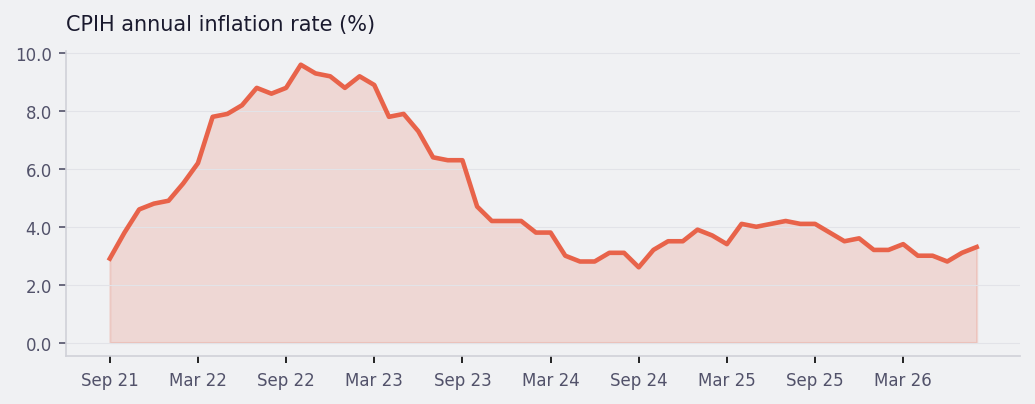
In the landscape of British politics, trust in Westminster remains a subject of fervent debate, particularly as the cost-of-living crisis continues to tighten its grip on households across the nation. The most recent Consumer Prices Index including owner occupiers' housing costs (CPIH) annual inflation rate of 3.3% as of August 2026 underscores the persistent economic pressures that citizens are facing. This statistic is not merely a number; it reflects the daily realities of families struggling to make ends meet in an environment where basic necessities are becoming increasingly unaffordable. As inflation impacts the purchasing power of the average citizen, it raises fundamental questions about the government's ability to manage the economy effectively and restore public confidence in its institutions.
The implications of this inflation rate are profound, extending far beyond the realm of economics into the sociopolitical fabric of the UK. Historical parallels can be drawn to previous periods of high inflation, such as the 1970s, when economic turmoil led to widespread disillusionment with political leadership. Today, we are witnessing a similar erosion of trust, exacerbated by a perceived disconnect between policymakers in Westminster and the realities faced by ordinary citizens. Government assurances and policy proposals often feel abstract and distant, as families contend with rising food prices, soaring energy bills, and increased housing costs. This disconnection fosters a sense of alienation, where the electorate feels their concerns are not adequately represented or prioritised by those in power.
As the cost of living continues to rise, so too does the likelihood of political unrest and increased public scrutiny. Citizens are becoming more vocal about their grievances, seeking accountability and transparency from their elected officials. The increasing prevalence of protests and calls for more direct forms of democratic engagement signals a shift in how the public perceives its relationship with Westminster. Engagement through social media platforms has transformed the political landscape, allowing for rapid dissemination of information and fostering a culture of immediate response. Yet this also raises the stakes for politicians: failing to address the pressing economic concerns can result in losing not only the trust of constituents but also their votes in forthcoming elections.
Ultimately, the 3.3% inflation rate serves as a litmus test for the current government’s ability to navigate these turbulent waters. It highlights the urgent need for policies that not only address the symptoms of economic distress but also rebuild the foundations of trust and engagement between the electorate and its representatives. The challenge lies in crafting responses that resonate with the public's lived experiences while also demonstrating competence and foresight. As the political landscape evolves, the capacity to effectively respond to such economic indicators will be critical in shaping the future of trust in Westminster. If the government can successfully bridge the gap between policy and people's realities, it may yet restore confidence in its ability to lead the nation through these challenging times.